
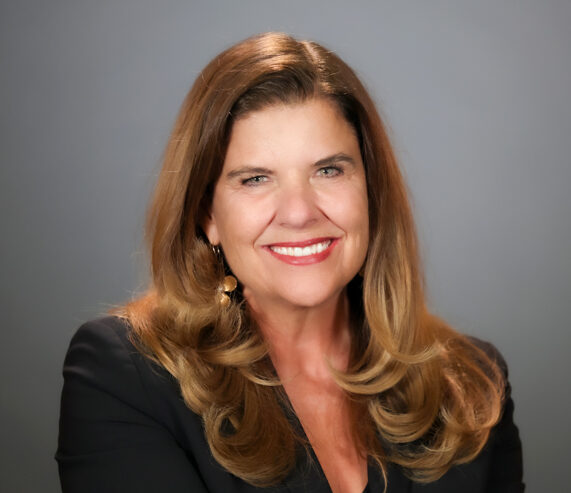
NEWSWELL Executive Director Nicole Carroll was recently elected chair of the Pulitzer Prize board, where she has served for the past eight years. She’s also the host of the Pulitzer on the Road podcast.
The most recent episode features Carroll with fellow board members David Remnick, editor of The New Yorker, and Carlos Lozada, an opinion columnist with The New York Times, sharing the history of the prizes and a behind-the-scenes look at how the prizes are decided.
Here’s an excerpt from their conversation, edited for length and clarity. You can find the entire episode here.
Nicole Carroll: Since the first Pulitzer Prizes were awarded in 1917, they have come to be associated with excellence in journalism, drama, fiction, history, biography, poetry, and music.
Now, every year, more than 2,500 entries are submitted in the Pulitzer Prize competition. With the help of 100 distinguished judges who serve on juries, and up to 20 board members, 23 prizes are awarded each spring.
How the judging works
Carroll: So there are juries for each of the book awards or the arts awards, and then each of the journalism awards. And these juries — that are generally five to seven people — narrow down the hundreds of submissions.
Carlos Lozada: They do the real work.
Carroll: They do so much work. Thank you, juries. And they give three finalists in each category. Three books, three pieces of music, three in drama and then three finalists in each journalism category. Those three finalists are what the board gets, and we vote on all categories. If you’re a jury, you just do your category. We do all 23. And we’ve all heard this — it’s the world’s best book club. … So we all get in the room, we’ve got our notes, and each person introduces a category and sort of kicks us off. And we also have committees that are responsible for leading the discussion. We all discuss it, but there maybe five, six, seven people on a committee that are really going to take the lead in the discussion. And then what I think is fascinating is how we go around the table and everybody has something to say, and it’s always spectacular and enlightening. I feel like I’m just sitting there learning.
David Remnick: Yeah. And you should say, the board is quite various, and by design. There’s a historian, a poet, or this or that, you know — a fair amount of journalists, obviously. But it’s quite various. So that, in an ideal situation, there’s somebody on the board that has at least a measure of expertise — maybe even devotes their career to it — so that they can guide the discussion, and their authority in that conversation can be very important to the conversation.
Carroll: And then it gets to one person who’s, like, ‘No, and here’s why’ — and then the entire discussion changes.
Remnick: Well, that’s it. Minds get changed. And I remember it happening — I won’t be specific — I was sat next to Carlos at one deliberation, and I went into that conversation absolutely convinced I was going to vote for book X, as opposed to Y, much less C — and I got really turned around. And that’s a fairly common thing.
Lozada: I like that. I like that a lot. I come armed with my preferences and my insights on a subject. And the beauty is that, as often as not, I get my mind changed. Since I won in criticism, I feel kind of proprietary about that category. I have very strong views on what should win and what shouldn’t, and what counts as real criticism. And I feel that my job on the board is to bring a few more people over to the losing side of a particular discussion. If I bring Nicole over, or I bring somebody else over to at least supporting that idea, I feel like I’ve done something,
How do you define excellence?
Carroll: Pulitzer in his will talks about awarding excellence, and we in our deliberations talk about excellence. What does that mean? What do you look for? This work is all so good — what sets a winner or a finalist above the others?
Lozada: First of all, I would think the criteria shift according to the category that we’re evaluating. If you’re looking at feature writing, the writing really needs to be superlative. But of course, superlative writing emerges from superlative reporting. In explanatory journalism or investigative journalism, you also want good writing, but that’s not the main thing that I’m seeking in that particular category. So, I think excellence is defined differently across different categories.
Remnick: Well, investigative reporting — it’s, what did you find out? And how hard was it to find that? And in defiance of what?
Carroll: And then, what impact did it have?
Remnick: Sure. Public service is very, very much, I think, in our heads — and sometimes we say it, and sometimes it’s just understood — is, does this potentially, or has it had, an effect on the way we live and do things? Did #MeToo reporting affect the way, in particular, men treat women in the workplace and in life? Or, potentially, could it? And so you’re making a judgment about that too in that particular category.
Lozada: We can agree in sort of broad terms, but the weight we attach to different aspects of excellence — whether it’s the writing, the reporting, how much did this piece of fiction, do we think, have the ability to actually alter not just our understanding of its subject, but really affect the way literature is done?
Remnick: And people talk about books in different ways. That’s always very striking to me.
Carroll: And that’s why that diversity of the board — that we have a poet, we have a historian, we have a local-news columnist —
Lozada: We have a novelist.
Carroll: We have a novelist. We have the editor of The New Yorker. We have a columnist for The New York Times. We all bring a little different lens to the work, and that’s what makes it, I think, so special.
Significance of the Pulitzer Prizes today
Carroll: This work does make a difference. Here are some examples: 1953 public service went to the Whiteville News Reporter and the Tabor City Tribune, whose editors had waged a campaign against the KKK in their cities, which led to over 100 arrests. In 2011, public service went to the LA Times for a story about local corruption in Bell, California. So when you think about our country today, and when you think about the journalism, the literature, the drama and the music that’s happening right now, what is the significance of the Pulitzer Prizes today? What significance do we continue to have?
Lozada: Joseph Pulitzer called public service the supreme end of journalism. … It’s for the utility and service that provides the readers, and that provides the nation. So that’s been embedded in the mission from day one. The other thing that I think is sort of worthy about the larger enterprise is the way that Joseph Pulitzer defined what a journalist is. He said: “A journalist is the lookout on the bridge of the ship of state. He notes the passing sail, the little things of interest that dot the horizon in fine weather. He reports the drifting castaway whom the ship can save. He peers through fog and storm to give warning of dangers ahead. He is not thinking of his wages or of the profits of his owners. He is there to watch over the safety and welfare of the people who trust him.” Trust is a key word there.
Remnick: Yeah.
Lozada: Being able to earn the trust — you can do all the reporting you want, but you have to earn the trust of readers and of the nation that you’re hoping to inform and affect.
Remnick: … This is a really perilous moment. And so to have a prize that comes along once a year and values the honest discovery of the truth, as best one can and as honestly as one can, seems to me of real value. Yes, it comes along with some self-celebration and competition and argument and disagreement — like the three of us are bound to have at any meeting. But I think the principle of it, which is this searching out of the truth and the telling of it — whether it’s in artistic form or journalistic form — to me has real value, and it’s not to be dismissed so easily.
Listen to the full Pulitzer on the Road episode here.
At a time when trust, accountability and public service journalism are under intense pressure, the Pulitzer Prizes remain a reminder of what great reporting can accomplish.
From local investigations to deeply human storytelling, the work honored each year reflects journalism’s enduring role in helping communities understand themselves — and hold power to account.
This update appeared in our May 19, 2026, newsletter. This version has been lightly edited for clarity.